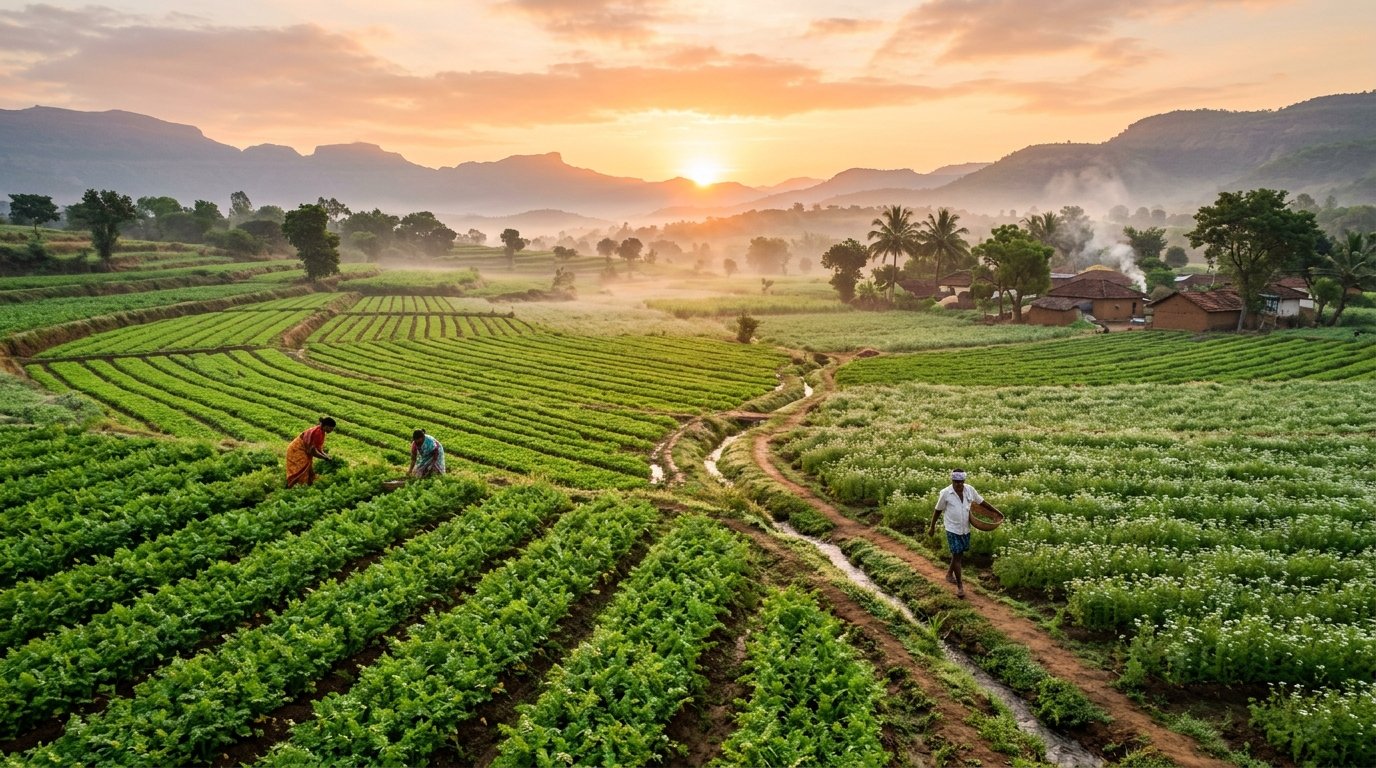
Every spice has a story, and that story begins long before it reaches your kitchen. From the agricultural fields where spices are cultivated to the markets where they are distributed, every stage contributes to the final product’s quality, aroma, and flavour.
At Samarth Spices, our agricultural roots and connections with farming communities shape our approach to sourcing and supplying spices.
1. Cultivation: Where Quality Begins
The journey starts with farmers who cultivate spices under suitable agricultural conditions. Factors such as soil quality, climate, irrigation, and farming practices influence crop development.
India’s diverse agricultural regions support the cultivation of numerous spices, including cumin, coriander, turmeric, chilli, and fennel. Farmers play an essential role in maintaining the agricultural traditions that make Indian spices widely appreciated.
2. Harvesting: Selecting the Right Time
Harvesting is an important stage in spice production. Different spices require different harvesting methods and maturity levels.
Proper harvesting helps preserve desirable characteristics such as natural colour, aroma, and flavour. Careful handling also reduces unnecessary damage to the harvested crop.
3. Sourcing: Connecting Farmers and Markets
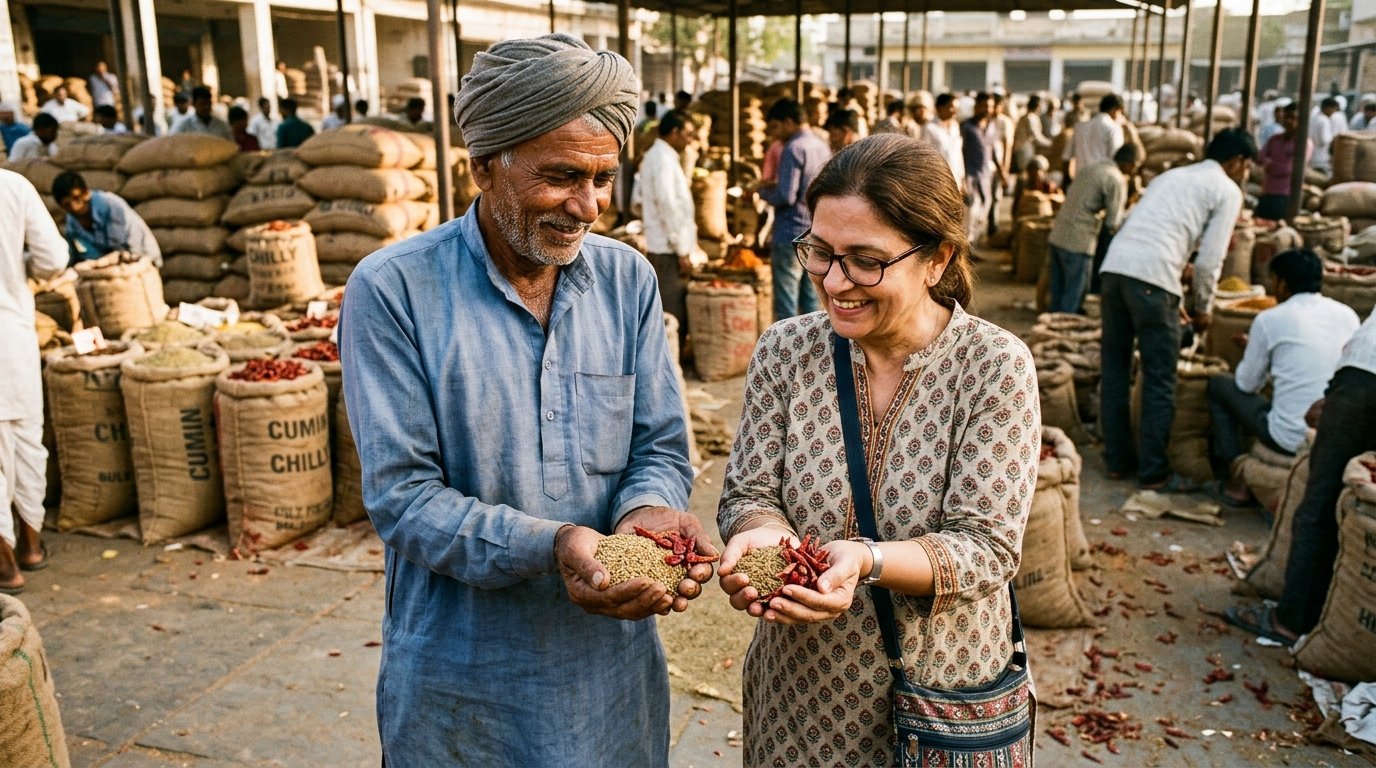
After harvesting, spices move through agricultural sourcing networks. Farmers, Farmer Producer Organisations (FPOs), and Agricultural Produce Market Committees (APMCs) help connect agricultural production with commercial markets.
At Samarth Spices, we value strong relationships with these networks because dependable sourcing is essential for maintaining consistent product availability.
4. Cleaning and Processing
Once sourced, spices may undergo cleaning, sorting, drying, grinding, or other processing activities depending on the product.
These processes help remove unwanted materials and prepare spices for their intended use. Careful processing is important for maintaining desirable product characteristics.
5. Quality Evaluation
Quality evaluation is an essential part of the spice supply chain. Depending on the product and its intended market, relevant parameters may include:
- Moisture content
- Foreign matter
- Colour and appearance
- Aroma
- Purity
- Microbiological characteristics
Appropriate checks help businesses assess whether products meet applicable specifications.
6. Packaging and Distribution
Packaging protects spices during storage, handling, and transportation. Suitable packaging helps reduce exposure to moisture, contamination, and environmental conditions that may affect quality.
Reliable distribution then connects these products with wholesalers, retailers, food businesses, and consumers.
Conclusion
The journey from farm to market involves agricultural knowledge, careful handling, quality-focused processes, and strong business relationships.
At Samarth Spices, we believe that understanding this journey is fundamental to delivering dependable spice products.
Rooted in Agriculture, Committed to Purity
Learn how our direct farmer connections ensure premium aroma, authentic purity, and consistent supply.